General Guidance
Food systems
Using the Toolkit: Where to Start and What to Expect
It's Always the Right Time to Start
This is a toolkit you can grow with. It’s modular, adaptable, and made for real-world messiness—start where it makes sense, go deep where it matters, and come back as your work (and the system) evolves.
Not sure where to begin? Check out 05 Find Your Entry Point below for role-based suggestions on what to focus on, and why it matters.
It's Always the Right Time to Start
This is a toolkit you can grow with. It’s modular, adaptable, and made for real-world messiness—start where it makes sense, go deep where it matters, and come back as your work (and the system) evolves.
Not sure where to begin? Check out 05 Find Your Entry Point below for role-based suggestions on what to focus on, and why it matters.
It's Always the Right Time to Start
This is a toolkit you can grow with. It’s modular, adaptable, and made for real-world messiness—start where it makes sense, go deep where it matters, and come back as your work (and the system) evolves.
Not sure where to begin? Check out 05 Find Your Entry Point below for role-based suggestions on what to focus on, and why it matters.
01
How to Use This Toolkit
This toolkit is designed to support teams at any stage—whether designing a new initiative, navigating implementation, or reflecting on emerging change. Some teams may engage deeply with one part; others may return over time as new needs arise. There is no required order—use what’s relevant now, and adapt as your work evolves.
What you'll find:
Ready-to-use tools
systems mapping templates,
reflection prompts
Complexity-suited
methods
Outcome Harvesting,
Contribution Analysis
Domains-based
indicators
trust,
governance quality
Reflective prompts
for adaptive strategy
and learning
Some users may engage deeply with one part of the toolkit; others may return over time. There is no required order. Use what is relevant now and adapt over time.
01
How to Use This Toolkit
This toolkit is designed to support teams at any stage—whether designing a new initiative, navigating implementation, or reflecting on emerging change. Some teams may engage deeply with one part; others may return over time as new needs arise. There is no required order—use what’s relevant now, and adapt as your work evolves.
What you'll find:
Ready-to-use tools
systems mapping templates,
reflection prompts
Complexity-suited
methods
Outcome Harvesting,
Contribution Analysis
Domains-based
indicators
trust,
governance quality
Reflective prompts
for adaptive strategy
and learning
Some users may engage deeply with one part of the toolkit; others may return over time. There is no required order. Use what is relevant now and adapt over time.
01
How to Use This Toolkit
This toolkit is designed to support teams at any stage—whether designing a new initiative, navigating implementation, or reflecting on emerging change. Some teams may engage deeply with one part; others may return over time as new needs arise. There is no required order—use what’s relevant now, and adapt as your work evolves.
What you'll find:
Ready-to-use tools
systems mapping templates,
reflection prompts
Complexity-suited
methods
Outcome Harvesting,
Contribution Analysis
Domains-based
indicators
trust,
governance quality
Reflective prompts
for adaptive strategy
and learning
Some users may engage deeply with one part of the toolkit; others may return over time. There is no required order. Use what is relevant now and adapt over time.
02
Toolkit Structure: Two Interconnected Layers of Practice
The toolkit is built around two interconnected layers of practice:
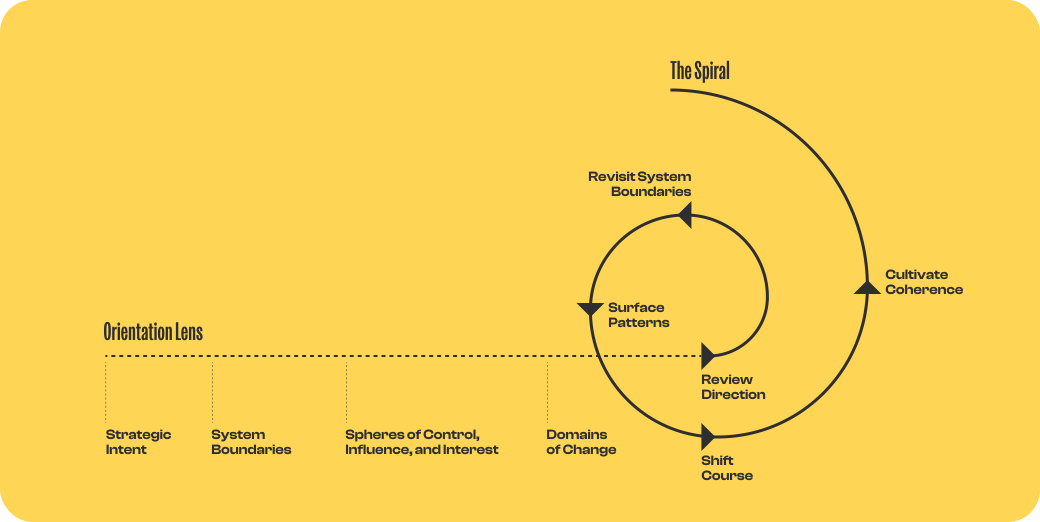
Orientation Lens – Start with Purpose
Use this during design, proposal development, or early implementation to clarify your long-term direction and system focus.
Strategic Intent
Define shared long-term purpose.
System Boundaries
Clarify scope and where the system begins and ends.
Spheres of Control, Influence, and Interest
Identify where your initiative can act, shape, or observe.
Domains of Change
Focus on deeper system shifts to prioritize and track.
The Spiral – Navigate Implementation
Use this once implementation begins to stay adaptive, reflective, and system-aware. It’s especially useful during transitions, disruptions, or as new learning emerges.
Review Direction
Re-anchor strategy in your Strategic Intent.
Revisit System Boundaries
Reassess boundaries, actors, and leverage points.
Surface Patterns
Track emerging behaviors, and signals using Domains of Change.
Shift Course
Adapt based on insights and system feedback.
Cultivate Coherence
Align actions and actors across the system.
These areas reinforce one another: Orientation shapes implementation, and learning from the Spiral feeds back into strategic clarity. This makes systems MEL a living practice—responsive to change, grounded in purpose.
02
Toolkit Structure: Two Interconnected Layers of Practice
The toolkit is built around two interconnected layers of practice:
Orientation Lens – Start with Purpose
Use this during design, proposal development, or early implementation to clarify your long-term direction and system focus.
Strategic Intent
Define shared long-term purpose.
System Boundaries
Clarify scope and where the system begins and ends.
Spheres of Control, Influence, and Interest
Identify where your initiative can act, shape, or observe.
Domains of Change
Focus on deeper system shifts to prioritize and track.
The Spiral – Navigate Implementation
Use this once implementation begins to stay adaptive, reflective, and system-aware. It’s especially useful during transitions, disruptions, or as new learning emerges.
Review Direction
Re-anchor strategy in your Strategic Intent.
Revisit System Boundaries
Reassess boundaries, actors, and leverage points.
Surface Patterns
Track emerging behaviors, and signals using Domains of Change.
Shift Course
Adapt based on insights and system feedback.
Cultivate Coherence
Align actions and actors across the system.
These areas reinforce one another: Orientation shapes implementation, and learning from the Spiral feeds back into strategic clarity. This makes systems MEL a living practice—responsive to change, grounded in purpose.
02
Toolkit Structure: Two Interconnected Layers of Practice
The toolkit is built around two interconnected layers of practice:
Orientation Lens – Start with Purpose
Use this during design, proposal development, or early implementation to clarify your long-term direction and system focus.
Strategic Intent
Define shared long-term purpose.
System Boundaries
Clarify scope and where the system begins and ends.
Spheres of Control, Influence, and Interest
Identify where your initiative can act, shape, or observe.
Domains of Change
Focus on deeper system shifts to prioritize and track.
The Spiral – Navigate Implementation
Use this once implementation begins to stay adaptive, reflective, and system-aware. It’s especially useful during transitions, disruptions, or as new learning emerges.
Review Direction
Re-anchor strategy in your Strategic Intent.
Revisit System Boundaries
Reassess boundaries, actors, and leverage points.
Surface Patterns
Track emerging behaviors, and signals using Domains of Change.
Shift Course
Adapt based on insights and system feedback.
Cultivate Coherence
Align actions and actors across the system.
These areas reinforce one another: Orientation shapes implementation, and learning from the Spiral feeds back into strategic clarity. This makes systems MEL a living practice—responsive to change, grounded in purpose.
03
Learning from Real-World Initiatives
Throughout the toolkit, you’ll find examples inspired by real-world initiatives. These are crafted to reflect the kinds of decisions, tensions, and learning moments that show up in systems MEL work—without being prescriptive.
One example comes from Peru’s multi-stakeholder platform for sustainable coffee, which brought together diverse actors to reshape governance, collaboration, and sector-wide priorities. Another is a dryland farming initiative in northern Kenya where an initial focus on productivity evolved into a broader systems approach centered on resilience, governance, and ecological stewardship. These examples show that systems MEL doesn’t require perfection—just ongoing practice, curiosity, and the willingness to learn and adapt over time.

Photo: UNDP Peru

Photo: UNDP Kenya
03
Learning from Real-World Initiatives
Throughout the toolkit, you’ll find examples inspired by real-world initiatives. These are crafted to reflect the kinds of decisions, tensions, and learning moments that show up in systems MEL work—without being prescriptive.
One example comes from Peru’s multi-stakeholder platform for sustainable coffee, which brought together diverse actors to reshape governance, collaboration, and sector-wide priorities. Another is a dryland farming initiative in northern Kenya where an initial focus on productivity evolved into a broader systems approach centered on resilience, governance, and ecological stewardship. These examples show that systems MEL doesn’t require perfection—just ongoing practice, curiosity, and the willingness to learn and adapt over time.
Photo: UNDP Peru
Photo: UNDP Kenya
03
Learning from Real-World Initiatives
Throughout the toolkit, you’ll find examples inspired by real-world initiatives. These are crafted to reflect the kinds of decisions, tensions, and learning moments that show up in systems MEL work—without being prescriptive.
One example comes from Peru’s multi-stakeholder platform for sustainable coffee, which brought together diverse actors to reshape governance, collaboration, and sector-wide priorities. Another is a dryland farming initiative in northern Kenya where an initial focus on productivity evolved into a broader systems approach centered on resilience, governance, and ecological stewardship. These examples show that systems MEL doesn’t require perfection—just ongoing practice, curiosity, and the willingness to learn and adapt over time.
Photo: UNDP Peru
Photo: UNDP Kenya
04
Where to Begin: Entry Points for Practice
With the structure of the toolkit in mind, this section guides you into practice. It outlines key entry points — ways to begin applying systems MEL depending on your context, stage, and needs. Each entry point is supported by dedicated tools developed specifically for this guidance, helping teams clarify intent, define boundaries, and foster learning within complex systems.
For additional tools and resources, please visit 360 Systems MEL Tools to complement this core set and support deeper exploration.
Entry Point
Purpose
Included Tools
ORIENTATION LENS
Design and early planing
Boundaries
Define scope and focus
Domains of Change
Supports framing systems shifts in design and observing deeper patterns in implementation
the spiral
During Implementation
Review Direction
Anchor MEL in long-term transformation goals by reconnecting to your Strategic Intent
Revisit System Boundaries
Revisit your systems boundaries and spheres of influence to understand how the context has shifted and where you can act
Surface Patterns
Observe emerge signals and track patterns of change
04
Where to Begin: Entry Points for Practice
With the structure of the toolkit in mind, this section guides you into practice. It outlines key entry points — ways to begin applying systems MEL depending on your context, stage, and needs. Each entry point is supported by dedicated tools developed specifically for this guidance, helping teams clarify intent, define boundaries, and foster learning within complex systems.
For additional tools and resources, please visit 360 Systems MEL Tools to complement this core set and support deeper exploration.
Entry Point
Purpose
Included Tools
ORIENTATION LENS
Design and early planing
Boundaries
Define scope and focus
Domains of Change
Supports framing systems shifts in design and observing deeper patterns in implementation
the spiral
During Implementation
Review Direction
Anchor MEL in long-term transformation goals by reconnecting to your Strategic Intent
Revisit System Boundaries
Revisit your systems boundaries and spheres of influence to understand how the context has shifted and where you can act
Surface Patterns
Observe emerge signals and track patterns of change
04
Where to Begin: Entry Points for Practice
With the structure of the toolkit in mind, this section guides you into practice. It outlines key entry points — ways to begin applying systems MEL depending on your context, stage, and needs. Each entry point is supported by dedicated tools developed specifically for this guidance, helping teams clarify intent, define boundaries, and foster learning within complex systems.
For additional tools and resources, please visit 360 Systems MEL Tools to complement this core set and support deeper exploration.
Entry Point
Purpose
Included Tools
ORIENTATION LENS
Design and early planing
Boundaries
Define scope and focus
Domains of Change
Supports framing systems shifts in design and observing deeper patterns in implementation
the spiral
During Implementation
Review Direction
Anchor MEL in long-term transformation goals by reconnecting to your Strategic Intent
Revisit System Boundaries
Revisit your systems boundaries and spheres of influence to understand how the context has shifted and where you can act
Surface Patterns
Observe emerge signals and track patterns of change
05
Find Your Entry Point: Guidance by Role

Photo: UNDP São Tomé and Príncipe
This toolkit is designed for people working across different roles in food and agricultural systems. Each role has its own entry points — not everyone needs the same level of depth.
Role
What to Focus On
Why
MEL Practitioners
The full Food Systems Toolkit (Orientation Lens + The Spiral)
How-to Sheets:
– Systems-informed Indicators
– Domains of Change Observation Grid
– Signals of Change Tracking
– Ripple Effects Mapping
– Spheres
– Systems-informed ToC
To design, track, and adapt MEL systems that go beyond outputs—capturing shifts in relationships, power, behavior, and governance.
Project Designers & Managers
Orientation Lens:
– Strategic Intent
– Defining Boundaries
– Spheres of Control/Influence/Interest
– Domains of Change
Spiral:
– Revisit Boundaries
– Shift Course
– Surface Patterns
How-to Sheets:
– How to Formulate a Strategic Intent
– How to Define Boundaries
– Systems Mapping
– Identifying Leverage Points
– How to Define Spheres
– Systems Informed Theory of Change
– Selecting Priority Domains of Change
– Domains of Change Observation Grid
– How to Define Boundaries
– How to Define Spheres
– Power Mapping
– Identifying Leverage Points
– Collective Sensemaking
– Learning Questions
– Systems Aware Indicator Builder
– Signals of Change
– Domains of Change Observation Grid
– Ripple Effects Mapping
To design initiatives with systems thinking from the start, ensure alignment with transformation goals, and adapt plans as new learning emerges.
Program/Portfolio Managers
The full Food Systems Toolkit (Orientation Lens + The Spiral)
Spiral:
– Revisit System Boundaries (for coherence across initiatives)
– Cultivate Coherence (for alignment)
How-to-Sheets:
– Collective Sensemaking
– How to Define Boundaries
– How to Define Spheres
– Power Mapping
– Identifying Leverage Points
To enhance coherence and alignment across multiple projects or regions, support adaptive management at a portfolio level, and foster shared learning across initiatives and regions.
Funders
Systems MEL Journey Map Kenya and Peru
(concise entry point)
Orientation Lens:
– Strategic Intent
– Boundaries
– Spheres
Spiral:
– Cultivate Coherence
– Reflection Tools
How-to Sheets:
– How to Formulate a Strategic Intent
– How to Define Boundaries
– Systems Mapping
– Identifying Leverage Points
– How to Define Spheres
– Systems Informed Theory of Change
– Collective Sensemaking
To strengthen strategic decision-making, partner effectively with grantees, and understand whether investments are driving meaningful systems change.
05
Find Your Entry Point: Guidance by Role
Photo: UNDP São Tomé and Príncipe
This toolkit is designed for people working across different roles in food and agricultural systems. Each role has its own entry points — not everyone needs the same level of depth.
Role
What to Focus On
Why
MEL Practitioners
The full Food Systems Toolkit (Orientation Lens + The Spiral)
How-to Sheets:
– Systems-informed Indicators
– Domains of Change Observation Grid
– Signals of Change Tracking
– Ripple Effects Mapping
– Spheres
– Systems-informed ToC
To design, track, and adapt MEL systems that go beyond outputs—capturing shifts in relationships, power, behavior, and governance.
Project Designers & Managers
Orientation Lens:
– Strategic Intent
– Defining Boundaries
– Spheres of Control/Influence/Interest
– Domains of Change
Spiral:
– Revisit Boundaries
– Shift Course
– Surface Patterns
How-to Sheets:
– How to Formulate a Strategic Intent
– How to Define Boundaries
– Systems Mapping
– Identifying Leverage Points
– How to Define Spheres
– Systems Informed Theory of Change
– Selecting Priority Domains of Change
– Domains of Change Observation Grid
– How to Define Boundaries
– How to Define Spheres
– Power Mapping
– Identifying Leverage Points
– Collective Sensemaking
– Learning Questions
– Systems Aware Indicator Builder
– Signals of Change
– Domains of Change Observation Grid
– Ripple Effects Mapping
To design initiatives with systems thinking from the start, ensure alignment with transformation goals, and adapt plans as new learning emerges.
Program/Portfolio Managers
The full Food Systems Toolkit (Orientation Lens + The Spiral)
Spiral:
– Revisit System Boundaries (for coherence across initiatives)
– Cultivate Coherence (for alignment)
How-to-Sheets:
– Collective Sensemaking
– How to Define Boundaries
– How to Define Spheres
– Power Mapping
– Identifying Leverage Points
To enhance coherence and alignment across multiple projects or regions, support adaptive management at a portfolio level, and foster shared learning across initiatives and regions.
Funders
Systems MEL Journey Map Kenya and Peru
(concise entry point)
Orientation Lens:
– Strategic Intent
– Boundaries
– Spheres
Spiral:
– Cultivate Coherence
– Reflection Tools
How-to Sheets:
– How to Formulate a Strategic Intent
– How to Define Boundaries
– Systems Mapping
– Identifying Leverage Points
– How to Define Spheres
– Systems Informed Theory of Change
– Collective Sensemaking
To strengthen strategic decision-making, partner effectively with grantees, and understand whether investments are driving meaningful systems change.
05
Find Your Entry Point: Guidance by Role
Photo: UNDP São Tomé and Príncipe
This toolkit is designed for people working across different roles in food and agricultural systems. Each role has its own entry points — not everyone needs the same level of depth.
Role
What to Focus On
Why
MEL Practitioners
The full Food Systems Toolkit (Orientation Lens + The Spiral)
How-to Sheets:
– Systems-informed Indicators
– Domains of Change Observation Grid
– Signals of Change Tracking
– Ripple Effects Mapping
– Spheres
– Systems-informed ToC
To design, track, and adapt MEL systems that go beyond outputs—capturing shifts in relationships, power, behavior, and governance.
Project Designers & Managers
Orientation Lens:
– Strategic Intent
– Defining Boundaries
– Spheres of Control/Influence/Interest
– Domains of Change
Spiral:
– Revisit Boundaries
– Shift Course
– Surface Patterns
How-to Sheets:
– How to Formulate a Strategic Intent
– How to Define Boundaries
– Systems Mapping
– Identifying Leverage Points
– How to Define Spheres
– Systems Informed Theory of Change
– Selecting Priority Domains of Change
– Domains of Change Observation Grid
– How to Define Boundaries
– How to Define Spheres
– Power Mapping
– Identifying Leverage Points
– Collective Sensemaking
– Learning Questions
– Systems Aware Indicator Builder
– Signals of Change
– Domains of Change Observation Grid
– Ripple Effects Mapping
To design initiatives with systems thinking from the start, ensure alignment with transformation goals, and adapt plans as new learning emerges.
Program/Portfolio Managers
The full Food Systems Toolkit (Orientation Lens + The Spiral)
Spiral:
– Revisit System Boundaries (for coherence across initiatives)
– Cultivate Coherence (for alignment)
How-to-Sheets:
– Collective Sensemaking
– How to Define Boundaries
– How to Define Spheres
– Power Mapping
– Identifying Leverage Points
To enhance coherence and alignment across multiple projects or regions, support adaptive management at a portfolio level, and foster shared learning across initiatives and regions.
Funders
Systems MEL Journey Map Kenya and Peru
(concise entry point)
Orientation Lens:
– Strategic Intent
– Boundaries
– Spheres
Spiral:
– Cultivate Coherence
– Reflection Tools
How-to Sheets:
– How to Formulate a Strategic Intent
– How to Define Boundaries
– Systems Mapping
– Identifying Leverage Points
– How to Define Spheres
– Systems Informed Theory of Change
– Collective Sensemaking
To strengthen strategic decision-making, partner effectively with grantees, and understand whether investments are driving meaningful systems change.
06
Understanding the Foundations
The General Guidance is for everyone. It provides the foundation for why systems-informed MEL matters, and how it shifts traditional approaches toward learning, adaptation, and contribution thinking.

Photo: UNDP Peru
06
Understanding the Foundations
The General Guidance is for everyone. It provides the foundation for why systems-informed MEL matters, and how it shifts traditional approaches toward learning, adaptation, and contribution thinking.
Photo: UNDP Peru
06
Understanding the Foundations
The General Guidance is for everyone. It provides the foundation for why systems-informed MEL matters, and how it shifts traditional approaches toward learning, adaptation, and contribution thinking.
Photo: UNDP Peru
Implemented by:
United Nations
Development Programme
FUNDED BY:
MEL 360 is part of the Systems, Monitoring, Learning and Evaluation initiative (SMLE) of UNDP funded by the Gates Foundation.
CONTACT US AT:
WEBSITE DESIGNED IN 2025 BY RAFA POLONI AND BEATRIZ JANONI FOR UNDP
Implemented by:
United Nations
Development Programme
FUNDED BY:
MEL 360 is part of the Systems, Monitoring, Learning and Evaluation initiative (SMLE) of UNDP funded by the Gates Foundation.
CONTACT US AT:
WEBSITE DESIGNED IN 2025 BY RAFA POLONI AND BEATRIZ JANONI FOR UNDP
Implemented by:
United Nations
Development Programme
FUNDED BY:
MEL 360 is part of the Systems, Monitoring, Learning and Evaluation initiative (SMLE) of UNDP funded by the Gates Foundation.
CONTACT US AT:
WEBSITE DESIGNED IN 2025 BY RAFA POLONI AND BEATRIZ JANONI FOR UNDP